

The lazy version is simple: more UFC fights means more cage craft. The veteran knows how to pace five minutes, win the fence battle, survive a bad round, and make a prospect work through Plan B.
But the same number can mean something else. A long UFC record can also mean old injuries, slower reactions, years of hard rounds, and an opponent who grew up studying exactly that veteran’s game.
Where the numbers came from: using UFC fight data available through May 2026, FightAlpha counted each fighter’s prior UFC appearances before the bout, by fighter ID and event date. We kept fights with a clean winner and compared cases where one fighter had more prior UFC fights than the other.
Source notes and caveats
- Source: UFC fight history through May 2026.
- Included: fights with a clean winner and enough chronology to count each fighter’s prior UFC appearances.
- Excluded: draws, no contests, and rows without a clean winner. Disqualification wins are treated as wins when UFC fight history records a clean winner.
- UFC appearance: a prior UFC bout before the fight date in UFC history through May 2026. Contender Series, TUF, regional fights, amateur fights, and non-UFC promotion records are not counted as UFC experience.
- Controls: these cuts are descriptive. They do not control for age, odds, rankings, weight class, opponent quality, or short-notice context.
- Sample sizes: overall unequal-experience fights n=7,306; veteran vs debutant n=1,683; gap and era sample sizes are shown beside each percentage below.
The headline number
Across 7,306 UFC fights where one fighter had more prior UFC appearances, the more experienced fighter won 51.8%. That is barely above coin-flip: directional, not predictive by itself, and useful only as one feature rather than a pick rule.
The cleaner signal is at the start of a UFC career. When a UFC debutant faced someone who already had at least one UFC fight, the veteran won 59.6% across 1,683 fights.
The experience gap curve
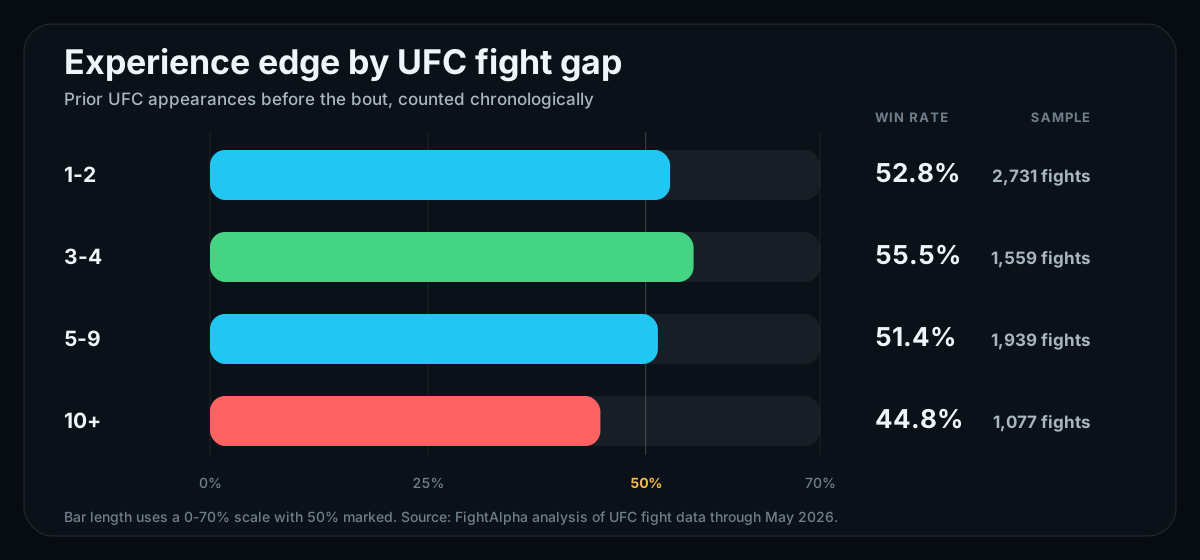
Small and moderate UFC-experience gaps helped. A 1-2 fight edge won 52.8% across 2,731 fights. A 3-4 fight edge won 55.5% across 1,559 fights. A 5-9 fight edge sat almost flat at 51.4% across 1,939 fights. But once the gap reached 10+ prior UFC fights, the more experienced fighter won only 44.8% across 1,077 fights.
That is the mileage problem. A huge experience gap can mean several different things at once:
- the veteran has solved more UFC problems before,
- the opponent has more tape to study,
- the veteran may be carrying more injuries and hard rounds,
- the less experienced fighter may be younger, faster, or entering their prime.
When the veteran tax shows up
The biggest gaps tell the story. Jim Miller is the exception machine: he beat Jesse Butler with a 40-fight UFC experience gap and Nikolas Motta with a 37-fight gap. But the same late-career territory also includes veterans losing to fresher names.
| Fight | Experience gap | More experienced | Less experienced | Veteran won? |
|---|---|---|---|---|
| Jim Miller vs Jesse Butler | 40 UFC fights | Jim Miller | Jesse Butler | Yes |
| Jim Miller vs Nikolas Motta | 37 UFC fights | Jim Miller | Nikolas Motta | Yes |
| Jim Miller vs Erick Gonzalez | 36 UFC fights | Jim Miller | Erick Gonzalez | Yes |
| Neil Magny vs Yaroslav Amosov | 36 UFC fights | Neil Magny | Yaroslav Amosov | No |
| Andrei Arlovski vs Martin Buday | 35 UFC fights | Andrei Arlovski | Martin Buday | No |
That table is why the answer cannot be “always back experience.” Sometimes cage time is a weapon. Sometimes it is the receipt.
The modern UFC made experience harder to cash
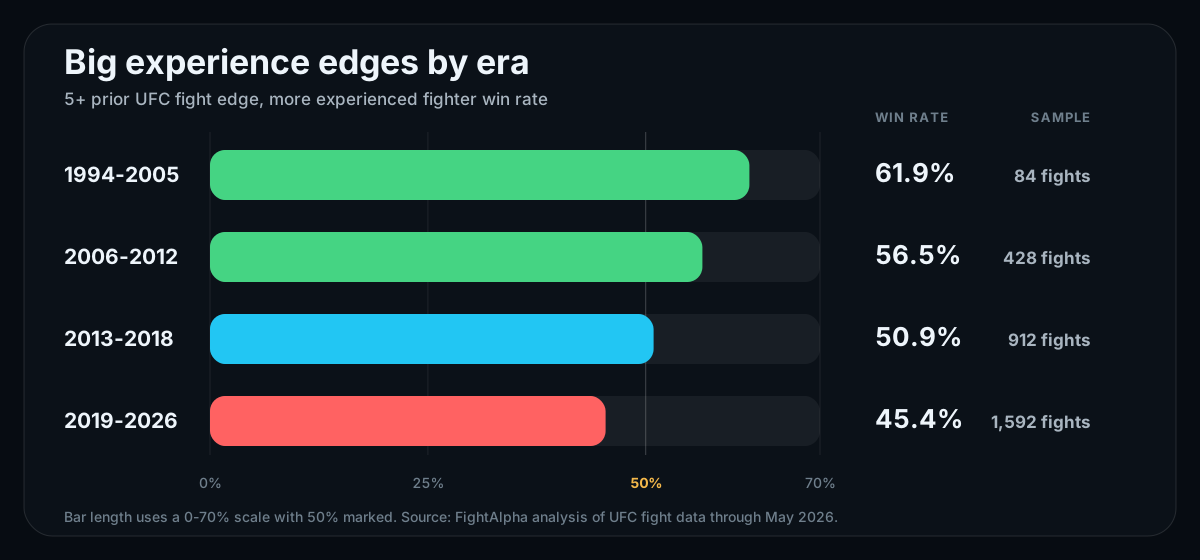
For fights with a 5+ UFC-fight experience edge, the early UFC rewarded the veteran heavily. From 1994 to 2005, the more experienced fighter won 61.9% across 84 fights. From 2006 to 2012, that was still 56.5% across 428 fights.
Then the signal faded. From 2013 to 2018, it was 50.9% across 912 fights. From 2019 through May 2026, the more experienced fighter won only 45.4% across 1,592 big-gap fights.
Why the signal changed
Modern UFC fighters arrive more prepared. A debutant today is often not a raw mystery box. They may already have regional title fights, Contender Series tape, elite gym rounds, and years of scouting available.
At the same time, long-tenured UFC fighters are easier to study. Their habits are on film. Their preferred exits are known. Their best tricks are still useful, but they are not secret.
Experience still matters. The important question is whether it creates a fight advantage today, or whether it simply describes yesterday’s rounds.
How to use the signal
Treat UFC experience as context, not a pick. A small experience edge can help with composure, pacing, and problem-solving. A debutant facing a UFC veteran deserves extra caution. But a massive experience edge should be checked for mileage, age, durability, pace decline, and whether the younger fighter can force uncomfortable minutes.
The practical betting questions are:
- Is this a true UFC debutant vs veteran spot?
- Does the veteran still have pace and durability, or only name value?
- Can the less experienced fighter force speed, wrestling, or volume?
- Is the market pricing experience as wisdom when it may be mileage?
The bottom line
UFC experience matters, but it is not linear. A little experience usually helps. Debutants have a real hill to climb. But huge experience gaps can turn the other way because fight mileage comes with a bill.
The smarter question is not “who has more UFC fights?” It is: does that experience still solve problems, or has it become evidence that the fighter has absorbed too many of them?
FAQ
Does UFC experience matter in betting?
Yes, but not as a standalone rule. Across UFC history through May 2026, the more experienced fighter won 51.8% overall, while UFC veterans beat debutants 59.6%. The signal gets weaker and can reverse when the experience gap is huge.
What counts as UFC experience here?
FightAlpha counted prior UFC appearances before each bout, using fighter IDs and event dates. This is UFC cage time, not total MMA fights or amateur experience.
Why do huge experience gaps perform worse?
Large gaps often mean the veteran is later in their career. That can bring injuries, accumulated damage, slower reactions, and more tape for opponents to study.
Should I fade every UFC debutant?
No. Debutants can be elite prospects or late-arriving veterans from other promotions. The data says debutants are risky against UFC veterans, not that they cannot win.