

The common assumption is simple: the longer fighter controls range, lands first, and keeps the shorter fighter stuck outside. Sometimes that is exactly what happens.
But reach only becomes a weapon when a fighter can actually use it, with jabs, kicks, frames, exits, clinch breaks, and enough defensive discipline to avoid being crowded.
Where the numbers came from: using UFC fight data available through May 2026, FightAlpha looked at fights where both athletes had a listed reach and one fighter had the reach edge. Draws and no contests were not counted.
The headline number
Looking across that UFC history, FightAlpha found 6,532 fights where one athlete had a listed reach advantage. The longer fighter won 51.9% of those fights.
Across thousands of fights, the longer fighter did win a little more often. But the edge is small enough that it should never decide a pick by itself. A reach edge is a clue. It is not the answer.
The five biggest reach gaps
The most extreme examples show why this question is worth asking. Some long fighters turned range into control. Others got walked down anyway.
| Fight | Reach gap | Longer fighter | Longer won? | Method |
|---|---|---|---|---|
| Miguel Torres vs Antonio Banuelos | 33.0 cm / 13.0 in | Miguel Torres | Yes | Unanimous decision |
| Jon Jones vs Daniel Cormier | 30.5 cm / 12.0 in | Jon Jones | Yes | Unanimous decision |
| Stefan Struve vs Mark Hunt | 30.5 cm / 12.0 in | Stefan Struve | No | KO/TKO |
| Roy Nelson vs Stefan Struve | 27.9 cm / 11.0 in | Stefan Struve | No | KO/TKO |
| Jon Jones vs Quinton Jackson | 27.9 cm / 11.0 in | Jon Jones | Yes | Submission |
Jones-Cormier is the clean “length matters” example. Struve-Hunt is the reminder that reach can disappear fast when the shorter fighter wins entries and exchanges.
Where the edge gets interesting
Small reach gaps did not move the result much. Under two inches, the longer fighter won 49.9%. From two to four inches, it was 52.0%. From four to six inches, it was 52.4%. In fights where one athlete had a reach edge of six inches or more, the longer fighter won 59.4% of the time across 596 fights.
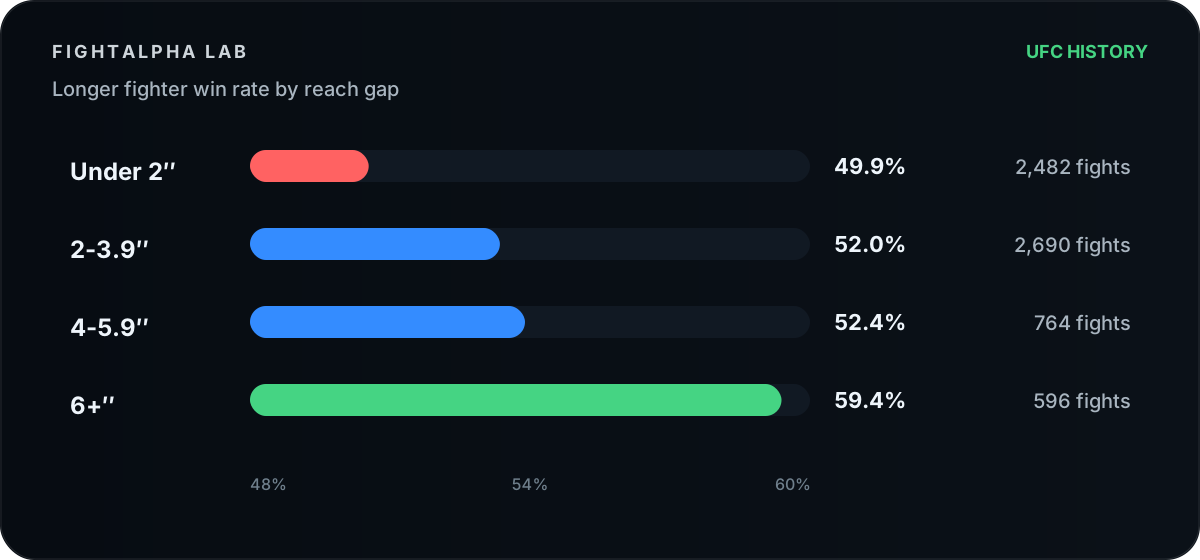
The betting takeaway is practical: do not upgrade a fighter just because they have one or two extra inches of reach. Start paying attention when the gap is extreme and the longer fighter has shown they can actually keep opponents at range.
Has the modern UFC changed this?
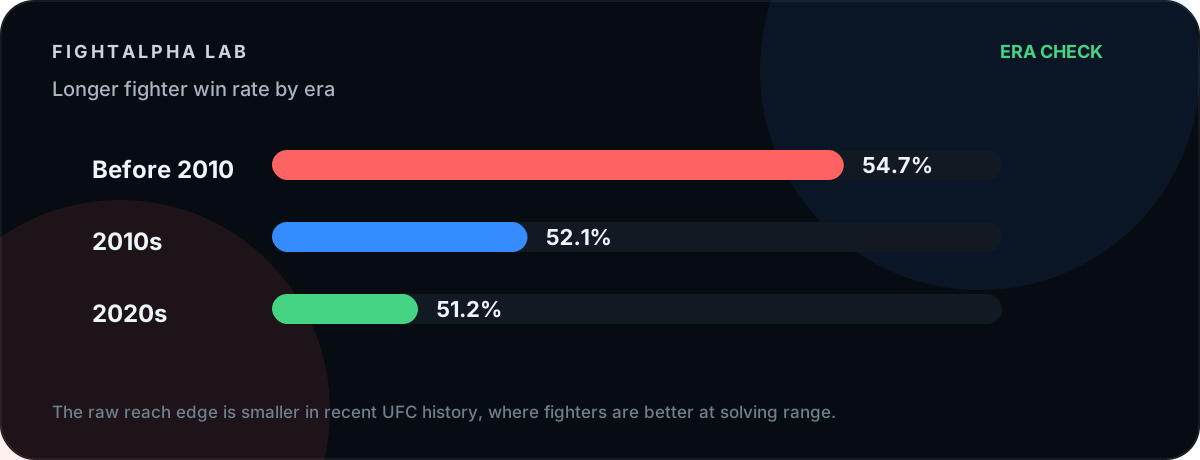
Before 2010, longer fighters won 54.7% of these fights. In the 2010s, that dropped to 52.1%. In the 2020s, it has been 51.2%.
That fits the modern game. Fighters are generally better now at solving range with calf kicks, stance switches, wrestling chains, pocket entries, and fence pressure.
What reach still misses
Reach does not tell us who wins the lead-foot battle. It does not tell us who can jab under pressure, who exits cleanly, who defends takedowns, or who wins clinch minutes.
It also does not capture how judges score the fight. That does not prove reach causes finishes, but it does suggest length shows up more clearly in fights that end before the scorecards. Longer fighters won 54.3% of KO/TKO fights and 56.0% of submission fights in this group, compared with 48.9% of decisions.
How to use the signal
Treat reach as one matchup signal among many. The useful questions are:
- Can the longer fighter keep the fight at range?
- Can the shorter fighter pressure without paying a heavy entry tax?
- Does wrestling or clinch threat erase the distance?
- Is the gap large enough to change the geometry of the fight?
The bottom line
Reach matters, but it is not a pick by itself. Across thousands of UFC fights, the longer athlete won a little more often than the shorter one. The edge becomes much more interesting when the gap reaches six inches or more, but only if the longer fighter has the footwork, jab, kicks, clinch breaks, and defensive habits to make that length count.
So the smarter question is not “who has longer arms?” It is “can they make that length matter?”
FAQ
Does reach matter in UFC betting?
Yes, but only as one matchup signal. A small UFC reach advantage should not move a pick by itself. The edge becomes more useful when the gap is extreme and the longer fighter has shown they can control range.
What is a big reach advantage in MMA?
Across UFC history through May 2026, the clearest jump came at six inches or more. Longer fighters won 59.4% of those fights across 596 fights.
Is reach more important than height?
Reach can be more useful than height because it describes fighting range more directly. Ape factor, reach minus height, also explains why a shorter fighter can still be the longer fighter.
Why do shorter fighters beat longer fighters?
Shorter fighters can erase reach with pressure, calf kicks, level changes, clinch entries, pocket boxing, cage work, and better timing. Reach only matters when the longer fighter can keep the fight at the right distance.