

The lazy version is simple: younger means faster, fresher, more explosive. Sometimes that is exactly right. Sometimes the veteran grabs a collar tie, steals three minutes against the fence, and makes youth look like bad time management.
Age is simple on paper, but it only matters when it changes the fight: pace, recovery, reactions, durability, or who can keep making the other fighter work.
Where the numbers came from: using UFC fight data available through May 2026, FightAlpha compared fighter birth dates with fight dates, kept fights with a clean older-vs-younger winner, and excluded draws, no contests, and same-age reads.
The headline number
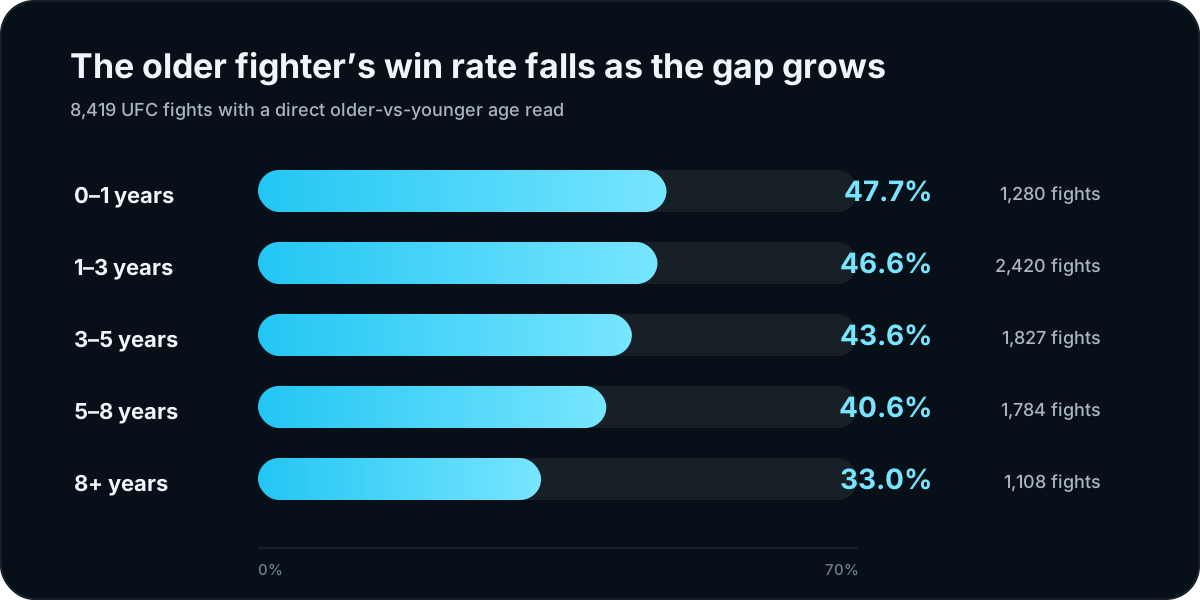
Across 8,419 UFC fights with a clean older-vs-younger read, the older fighter won 43.1%. Put plainly: older fighters won a little over four of every ten fights, while younger fighters won a little under six of every ten.
The useful part is where the age gap gets wide. Small gaps hover close to coin-flip territory. At eight years or more, the older fighter’s win rate drops to 33.0% across 1,108 fights.
Youngest, oldest, and weirdest
The extremes make the story more human. Raul Rosas Jr. appears in UFC history through May 2026 at 18.2 years old. Dan Lauzon was 18.5. Sage Northcutt was 19.6. On the other end, Ron van Clief fought at 51.9, Randy Couture at 47.9, and Dan Henderson at 46.1.
That range is why age is tricky: an 18-year-old prospect, a 47-year-old legend, and a 35-year-old veteran are not all telling the same story.
The five biggest age gaps
The widest gaps mostly went the way you would expect. Youth won all five of the biggest listed gaps in UFC history through May 2026.
| Fight | Age gap | Older fighter | Younger fighter | Older won? |
|---|---|---|---|---|
| Royce Gracie vs Ron van Clief | 23.9 years | Ron van Clief, 51.9 | Royce Gracie, 28.0 | No |
| Clay Guida vs Chase Hooper | 17.8 years | Clay Guida, 43.0 | Chase Hooper, 25.2 | No |
| Aleksei Oleinik vs Serghei Spivac | 17.6 years | Aleksei Oleinik, 44.0 | Serghei Spivac, 26.4 | No |
| Rob Font vs Raul Rosas Jr. | 17.3 years | Rob Font, 38.7 | Raul Rosas Jr., 21.4 | No |
| Alex Chambers vs Nadia Kassem | 17.1 years | Alex Chambers, 39.1 | Nadia Kassem, 22.0 | No |
At the most extreme end, youth did not just matter, it swept the top five gaps.
When old still works
Veterans still have their wins. Montse Rendon beat Alice Pereira despite a 16.8-year gap. Arlovski, Couture, Modafferi, and Angela Hill all show the same thing: age is a warning sign, not an automatic fade.
Those fights explain why age should be a question, not a pick. Youth brings pace, recovery, repeat shots, and scramble speed. Age can still bring clinch craft, trap-setting, timing, and the calm of someone who has already seen the first three bad ideas.
Has the modern UFC changed this?
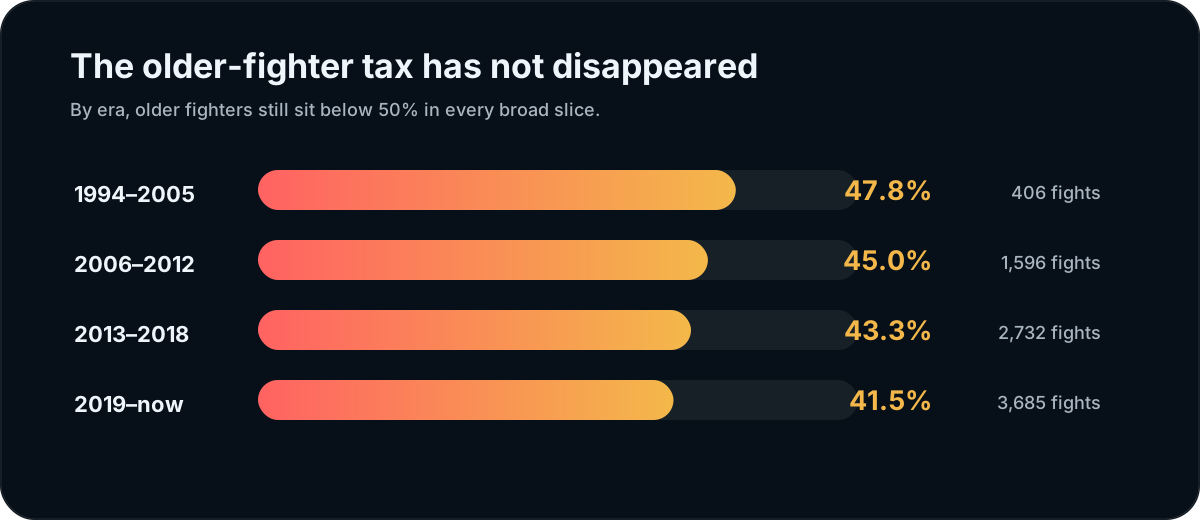
Older fighters finished below 50% in every broad era slice. From 1994 to 2005, older fighters won 47.8% across 406 fights. From 2006 to 2012, they won 45.0% across 1,596 fights. From 2013 to 2018, they won 43.3% across 2,732 fights. From 2019 through May 2026, they won 41.5% across 3,685 fights.
That does not mean modern veterans cannot survive. It means the sport now gives aging fighters fewer easy problems. Younger opponents are often better conditioned, better rounded, and better prepared than early-era specialists.
How to use the signal
Treat age as a pressure signal, not a standalone prediction. The practical takeaway is simple: ignore tiny gaps, respect big ones, then ask whether youth can actually show up in the fight.
Birthday age is not the same as fight age. A 34-year-old with low damage, good habits, and a controlled style may be fresher than a 29-year-old who has lived through wars.
The useful questions are:
- Is the age gap small enough to ignore, or big enough to reshape the matchup?
- Does the younger fighter force pace, scrambles, and repeat entries?
- Can the veteran slow the fight into clinch, cage, counter, or low-volume minutes?
- Does mileage matter more than birthday age in this specific matchup?
The bottom line
Age matters, but mostly when the gap gets wide. One or two years should not change your read. Eight years should make you ask harder questions.
The smarter question is not just “who is younger?” It is: will youth actually show up through pace, scrambles, recovery, and pressure, or can the veteran slow the fight down and make experience matter?
FAQ
Does age matter in UFC betting?
Yes, but not as a simple younger-equals-better rule. Across UFC history through May 2026, small age gaps were noisy, while 8+ year gaps were much more meaningful: older fighters won only 33.0% of those fights.
What is a big age gap in MMA?
FightAlpha treats five years as worth noticing and eight years as a major warning sign. At 5–8 years, older fighters won 40.6%. At 8+ years, they won 33.0%.
Can older UFC fighters still win?
Absolutely. Veteran skill, pace control, clinch craft, timing, and matchup style still matter. The age signal is strongest when the younger fighter can force speed, volume, wrestling scrambles, and recovery demands.
Is fighter age more important than fight mileage?
No. Fight mileage can matter more than birthday age in a specific matchup. Age gap is easier to measure consistently across UFC history, but damage history, layoffs, pace, injuries, and style all change how old a fighter actually looks in the cage.